
⚠️ This log is a personal documentation and not medical advice. Always consult your child’s surgeon or pediatric urologist for individualized care.
What is HBOT?
HBOT stands for hyperbaric oxygen therapy. It is a treatment in which a person breathes oxygen inside a special chamber with air pressure that is higher than normal.
Because the pressure is higher, the lungs can take in more oxygen than they normally would. That extra oxygen then travels through the blood to body tissues. Doctors may use HBOT to help certain wounds or damaged tissues heal.
In simple words, HBOT is a way to deliver more oxygen to tissue that may be struggling to heal well.
How is it related to hypospadias surgery?
In hypospadias care, some surgeons may use HBOT as an extra support treatment in selected cases, especially when healing may be harder than usual. This may include:
- redo or previously failed repairs
- complex cases with known wound-healing concerns
- situations involving grafts or tissue that may have weaker blood supply
The reason is that oxygen can support tissue healing. Research reviews suggest HBOT may lower graft failure and some complications in complicated hypospadias cases, but the evidence is still limited and not strong enough to say every child should have it.
So the practical takeaway is this: the decision depends on the surgeon, the surgical plan, and the child’s specific situation. It is reasonable to discuss it with the surgeon and seek a second opinion when needed.
Common questions
Below is a list of questions that may help with discussions with your surgeon and HBOT center. The answers below are based mainly on published sources, with a few notes from our own experience clearly marked as personal.
1 - Is it necessary to do HBOT for the hypospadias surgery?
Not always. For many children, hypospadias surgery is done without HBOT. It is usually considered only in selected cases where the surgeon thinks tissue healing may need extra support.
2 - Is it necessary to do the pre-surgery HBOT?
Some doctors may recommend HBOT before surgery in complex or redo cases, while others may not use it at all. Pre-surgery HBOT is a case-by-case decision.
Our personal reasons for doing pre-surgery HBOT were:
- It helped our child get used to HBOT before surgery, which made the post-surgery sessions easier.
- Our insurance covered one session per day before surgery, so it was not a major extra financial burden for us.
3 - How many sessions of post-surgery HBOT are recommended?
There is no single number that fits everyone. Mayo Clinic notes that the number of sessions depends on the medical condition, and some conditions may need many sessions.
For our own case, we did about 15 to 25 sessions, with each session lasting about 90 minutes. The exact number depended on the stage of surgery, how long we stayed near the HBOT facility, and how many sessions insurance approved.
We also did two sessions a day for the first three days after surgery to better help reducing the swellingness and speeding up the healing. This was our personal experience, not a general rule.
4 - What are the possible side effects when doing HBOT?
HBOT is usually well tolerated, but side effects can happen. The more common ones include:
- ear pressure, ear pain, or popping
- tiredness or lightheadedness after treatment
- sinus discomfort
Less common but more serious risks include:
- temporary vision changes
- middle ear injury
- lung injury
- oxygen toxicity, which can rarely cause seizures
Because high-oxygen environments also carry a fire risk, HBOT should be done in a properly trained medical setting.
5 - Can I go with the child for the HBOT if they are too young?
It depends on the type of chamber and the center’s rules.
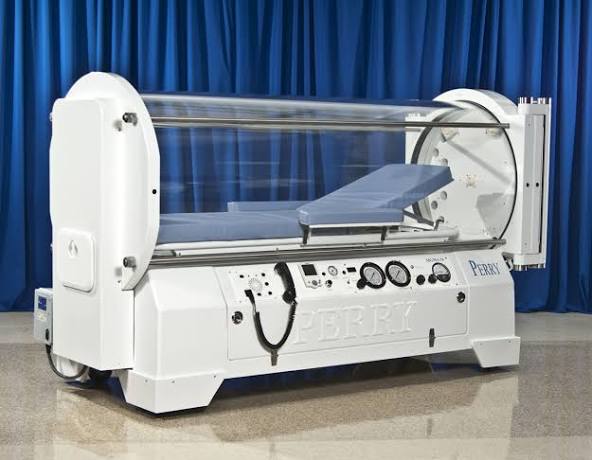
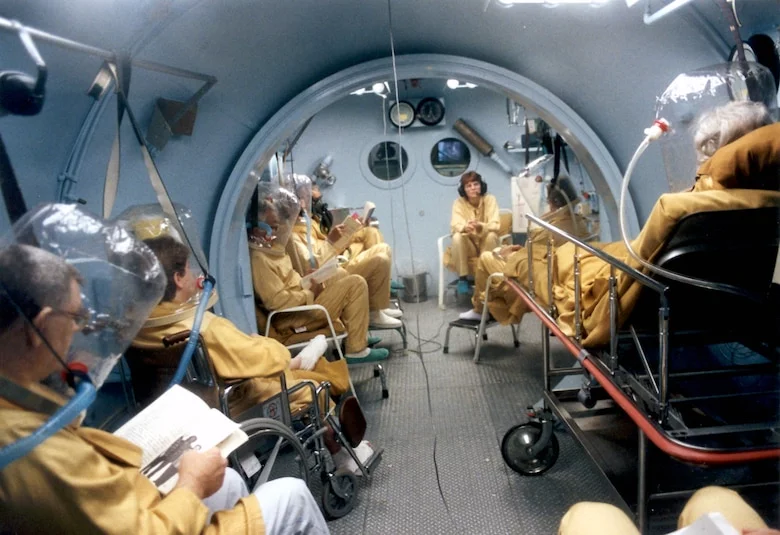
There are two common chamber types:
- Monoplace chamber: usually one patient lies in a clear chamber and breathes oxygen inside the pressurized chamber.
- Multiplace chamber: several people are treated in a larger chamber, and patients usually receive oxygen through a hood or mask.
Ask the HBOT center directly what they allow for young children. Rules about whether a parent can accompany the child, stay nearby, or communicate during treatment vary by facility and chamber setup.
6 - What are the clothes or other wearing requirements for HBOT?
Follow the center’s instructions exactly. Many centers use a 100% cotton clothes for safety. Patients may also be asked to remove jewelry, hearing aids, contact lenses, medication patches, and glasses.
7 - Does HBOT hurt?
Usually not. The most common discomfort is pressure in the ears, similar to what some people feel on an airplane or when going up a mountain.
8 - How to entertain during HBOT?
This depends on the chamber type and the center’s safety rules.
In general, personal electronic devices are not allowed inside the monoplace chamber. Some centers let patients watch TV or listen to audio through the chamber system. For young children, ask in advance what comfort items are allowed and how the staff usually helps children stay calm.
9 - What is the cost of HBOT?
Coverage and cost vary a lot.
For approved indications, Medicare, Medi-Cal, and many insurance plans may cover HBOT. For hypospadias-related use, coverage may depend on the diagnosis submitted, the insurer, and the facility. It is best to ask both the HBOT center and your insurance company about pre-authorization, copays, and out-of-pocket estimates.
10 - What needs to be prepared for HBOT?
Useful things to prepare include:
- Financial preparation: check with your insurance company to see whether treatment is covered and whether pre-authorization is needed.
- Clothing: ask the center what you or your child should wear. Many centers provide approved clothing.
- Comfort planning for a young child: ask what toys, books, or other non-electronic comfort items are allowed.
- Scheduling: sessions are often repeated over many days, so transportation, childcare for siblings, and time off work may also need planning.
Reference
-
Mayo Clinic.
Hyperbaric oxygen therapy
https://www.mayoclinic.org/tests-procedures/hyperbaric-oxygen-therapy/about/pac-20394380 -
Johns Hopkins Medicine.
Complications of Hyperbaric Oxygen Treatment
https://www.hopkinsmedicine.org/health/treatment-tests-and-therapies/complications-of-hyperbaric-oxygen-treatment -
Undersea & Hyperbaric Medical Society (UHMS).
Compromised Grafts and Flaps
https://www.uhms.org/12-compromised-grafts-and-flaps.html -
Chua ME, Kim JJK, Ming JM, et al.
The utilization of hyperbaric oxygenation therapy in hypospadias repair: a systematic review and meta-analysis.
International Urology and Nephrology. 2022.
https://pubmed.ncbi.nlm.nih.gov/35024997/ -
Anand S, Krishnan N, Bajpai M.
Utility and safety of hyperbaric oxygen therapy as a rescue treatment in complicated cases of hypospadias: A systematic review and meta-analysis.
Journal of Pediatric Urology. 2022.
https://pubmed.ncbi.nlm.nih.gov/34696963/ -
Memorial Hermann.
Pediatric Hyperbaric Chamber
https://memorialhermann.org/services/treatments/pediatric-hyperbaric-chamber -
Miller Children’s & Women’s Hospital.
Hyperbaric Oxygen Program
https://www.millerchildrens.memorialcare.org/specialties/hyperbaric-oxygen-program -
U.S. Food and Drug Administration (FDA).
Follow Instructions for Safe Use of Hyperbaric Oxygen Therapy Devices
https://www.fda.gov/medical-devices/letters-health-care-providers/follow-instructions-safe-use-hyperbaric-oxygen-therapy-devices-letter-health-care-providers -
UCSF Health Hyde Hospital.
Hyperbaric Oxygen Therapy FAQ
https://sfcommunityhospitals.ucsfhealth.org/saint-francis/services/hyperbaric-oxygen-therapy/hyperbaric-oxygen-therapy-faq -
Hyperbaric Healing Treatment Center.
Multiplace and Monoplace hyperbaric chambers: What’s the difference?
https://hyperbaricsorlando.com/multiplace-and-monoplace-hyperbaric-chambers/